
Care homes
The risk and resilience hub for UK care homes.
Give each care home control of its own risks, dependencies and response plans, while the group team sees the position across every site.
Book a demoA care group with three sites.
In this demonstration, a group with three care homes, each site needed to manage its own risks while the group needed a clear view across all three.
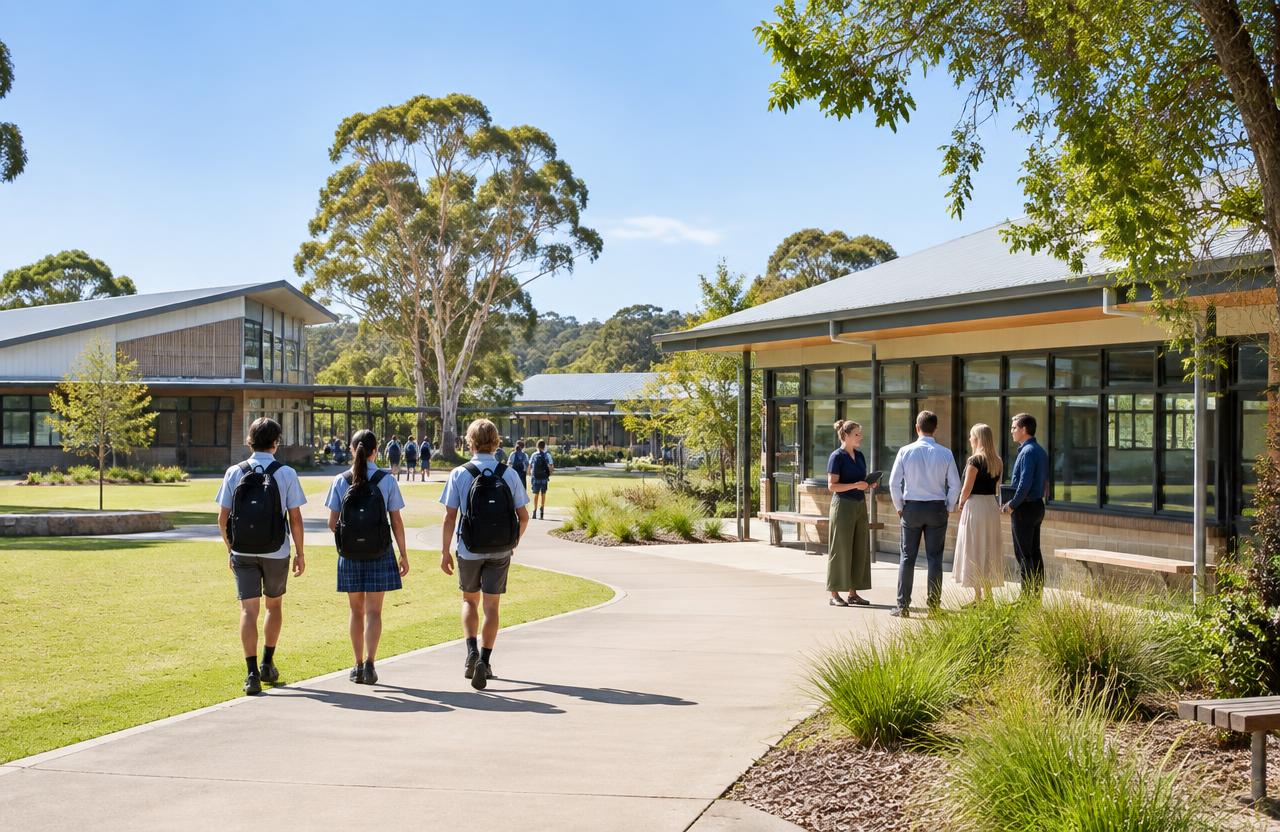
Example Care Care Group
Three care homes, each with its own responsibilities.
- Site One
- Site Two
- Site Three
Rapid growth across three sites
From one residential site to three in just a few years. Every step added things nobody had written down: the high-rise lift at Site Two, the kitchen that feeds all three sites, the one rostering system every roster leans on.
Rising regulatory expectations
Continuity stopped being a once-a-year document and became something the board could ask about any day of the week — and expect evidence for, not promises.
They needed group-level visibility across every site, clear ownership at each site, and reporting the board could rely on.
That's what Oakwood Planner gives them: one hub for the group, one spoke for every site.
Plans without a full picture
The plans were written once, approved and filed away. Risks lived in a spreadsheet one person maintained. Each site knew its own world, but nobody could see the whole picture or answer the question that actually matters: what stops when this fails?
One hub for the group, one spoke for each site.
The hub is Example Care Care Home Group, managed by the group operations manager. Each spoke is a Example Care care home, managed by its General Manager. It's how the organisation already works — the Hub just makes it visible.
Hub — Example Care Care Home Group
Managed by the group operations manager
Sees every site rolled up. Provisions accounts and spokes. Owns the shared contacts and resources every site draws on.
Spoke
Example Care Care Home — Site One
Managed by the General Manager
Specialist dementia care — its own risks, plans and resources.
Sees information for their site only.
Spoke
Example Care Care Home — Site Two
Managed by the General Manager
High-rise residence — lifts, level access and meal distribution.
Sees information for their site only.
Spoke
Example Care Care Home — Site Three
Managed by the General Manager
Coastal site — generator cover and storm exposure.
Sees information for their site only.
- Risk and incidents rolled up across every site, ready for the board.
- Accounts and spokes are provisioned from the hub — nobody signs themselves up.
- The shared contacts and resources every site draws on.
- Its own activities, resources, risks and plans.
- Sites cannot see other sites or switch into their views.
- The group operations team provisions accounts and provides first-line help.
Risk management
Make the risks visible before they become incidents.
At Site Two, a lift failure has a different consequence from a rostering disruption at Site One. Each site records its exposures, owners, existing controls and next review. Group operations can see where risks recur across sites and where treatment is still needed.
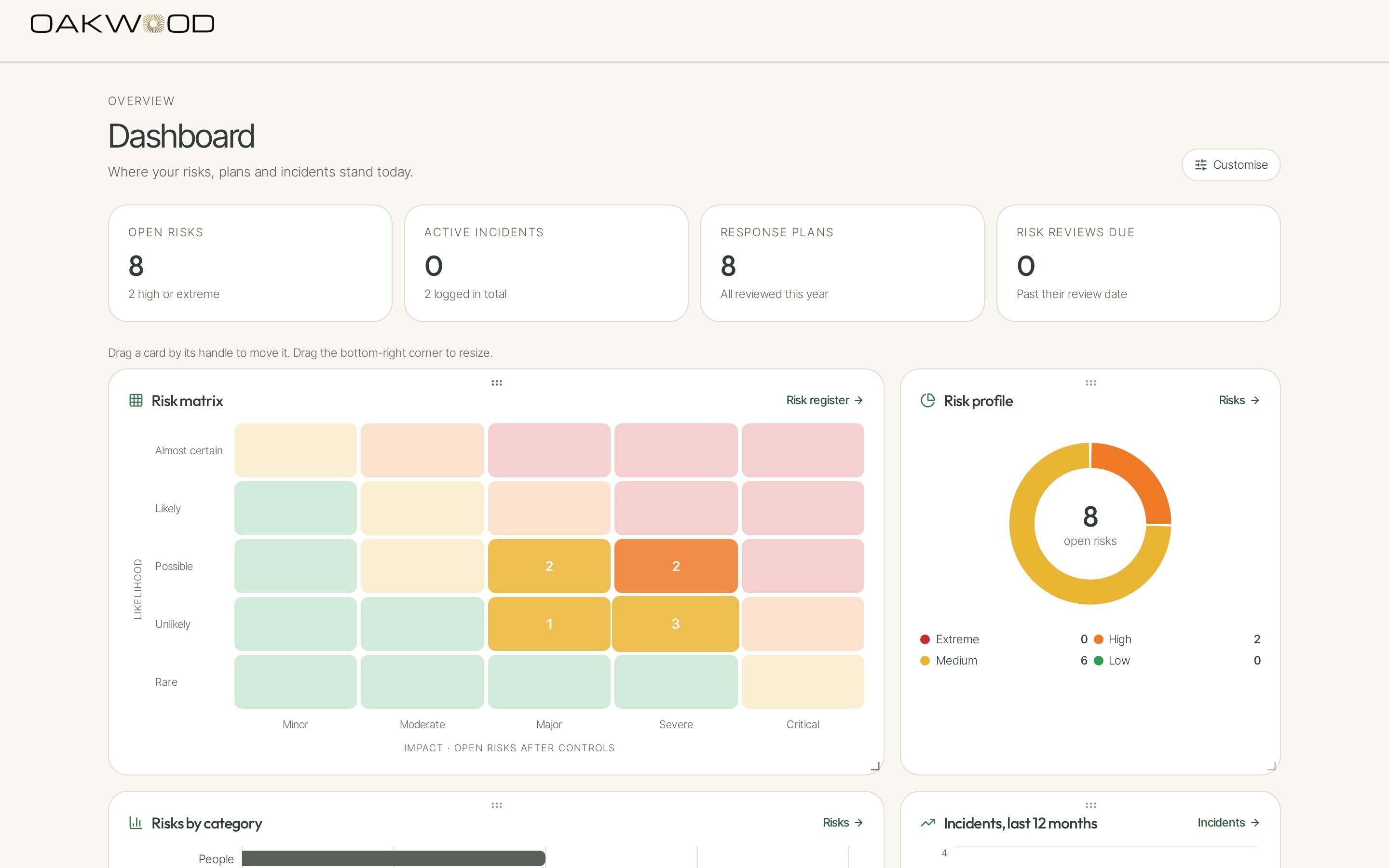
Demonstration capture; branding refreshed.
Lift failure affecting resident access
Loss of the shared rostering system
Staffing shortages in specialist care
Record an owner, existing controls, inherent and residual ratings, treatment and review date for each risk. The hub can compare risks across teams; a spoke sees only its own.
From disruption to impact
When one thing stops, what else is affected?
The disruption
The Site Two lift fails during a meal service window.
Cascading impact
Resident access and meal distribution depend on the lift. The dependency map identifies those affected activities and the people and equipment they rely on.
The response
Site Two confirms what is down and follows its lift outage plan. Group operations can see the incident in the rolled-up view.
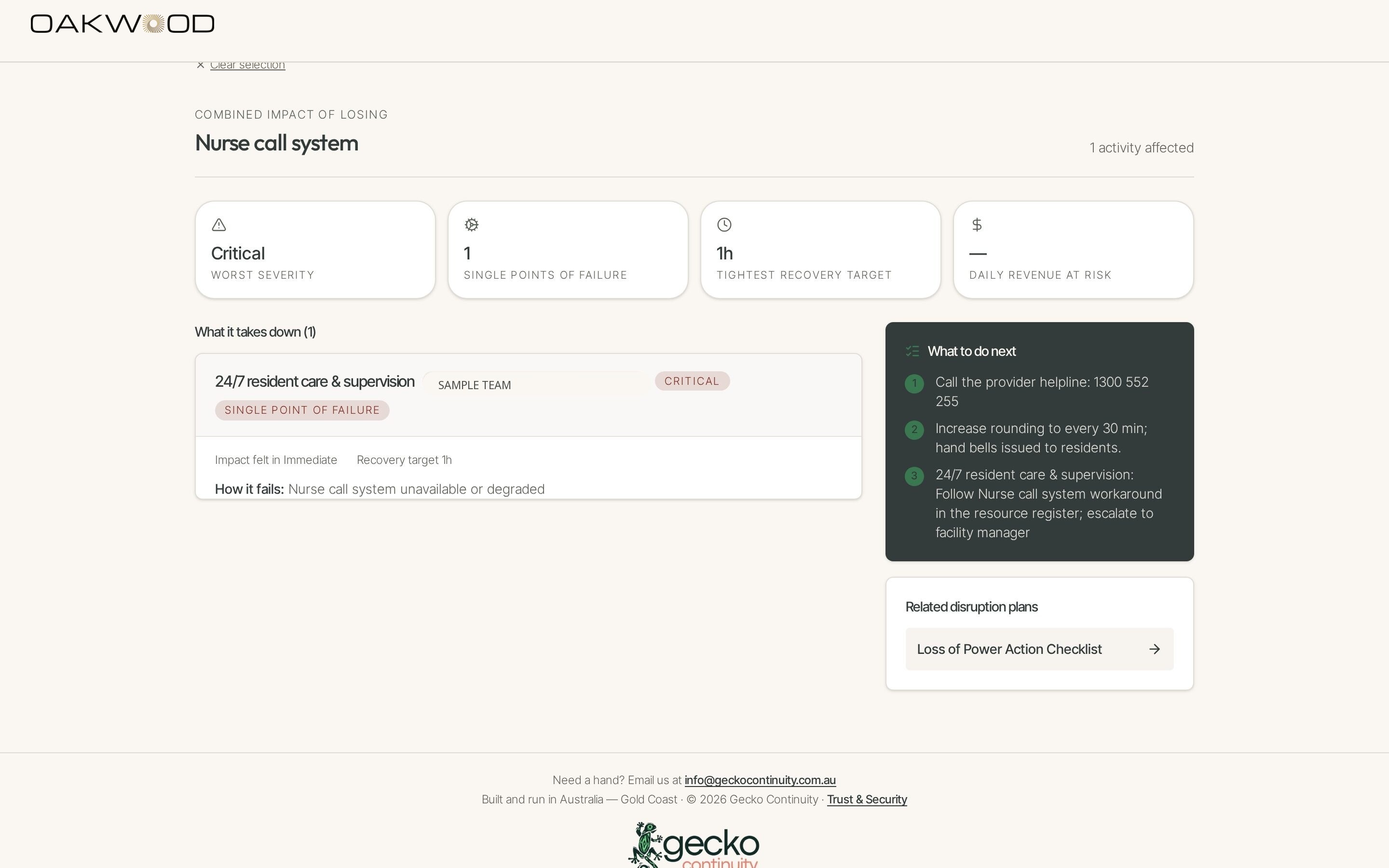
Demonstration capture; branding refreshed.
Trace the dependencies
Link the lift, kitchen, staff roles and access routes to the activities they support. Select the failed resources together to see the combined effect rather than treating each failure in isolation.
Record recovery objectives, minimum service levels and practical workarounds, then check them against the affected activities before an incident occurs.
Prepare, respond, account for it
A plan your people can actually use.
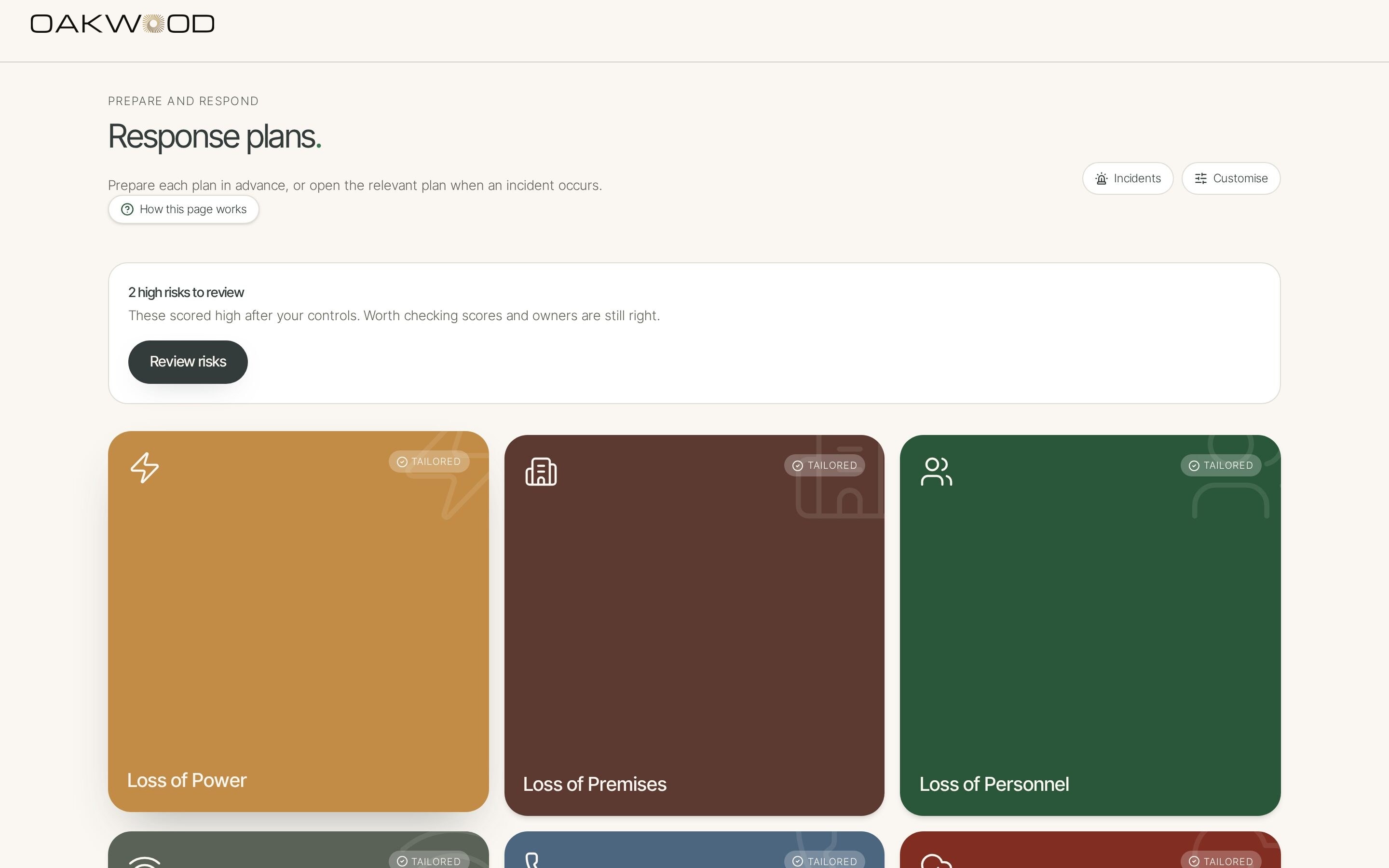
Demonstration capture; branding refreshed.
Build the plan
Build site-specific checklists or decision trees for lift, power, staffing and system disruptions. Keep shared contacts and resources at group level where appropriate.
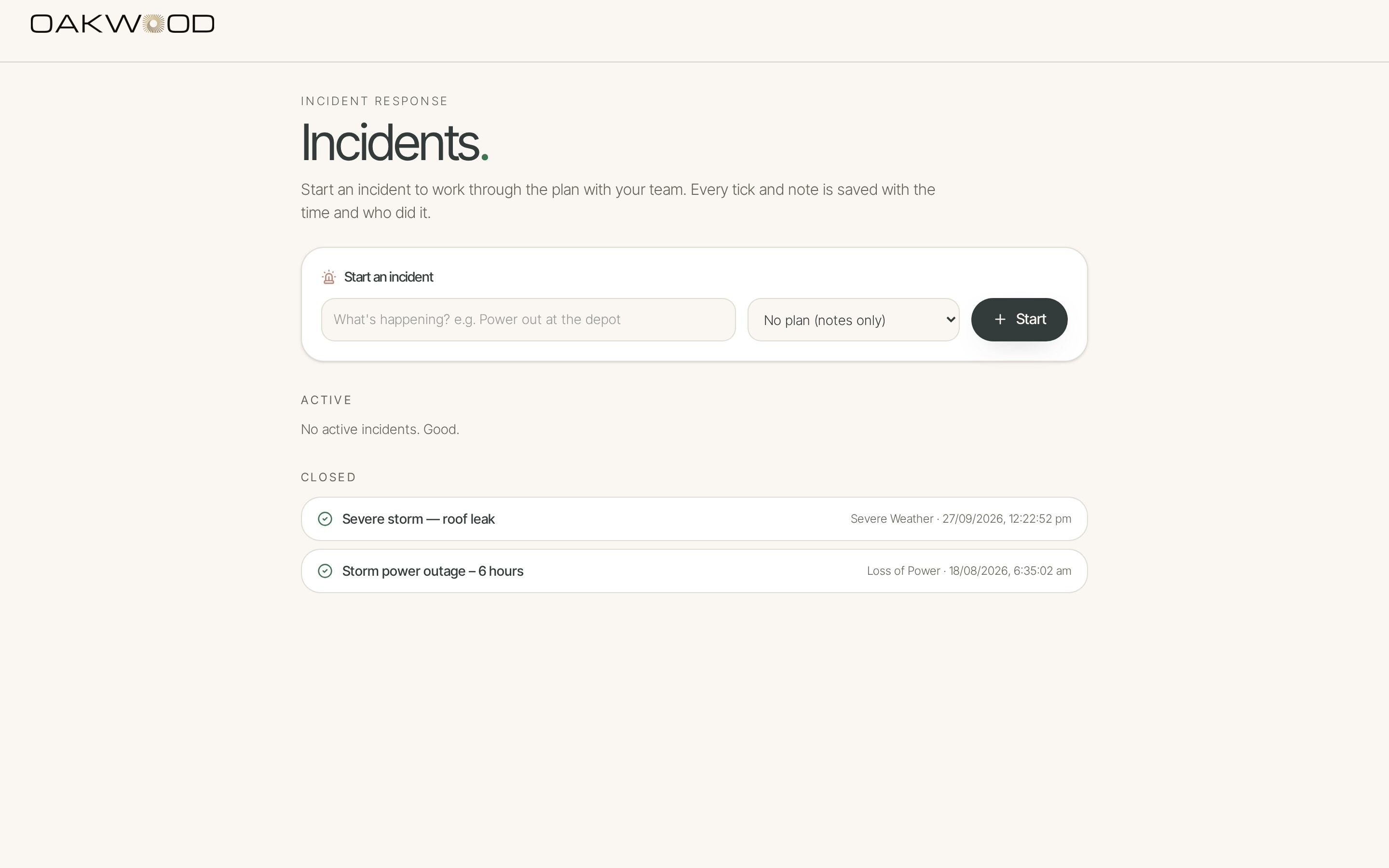
Demonstration capture; branding refreshed.
Run the incident
When an incident starts, the site team confirms which resources are unavailable, follows the relevant steps and records actions and decisions as they occur.
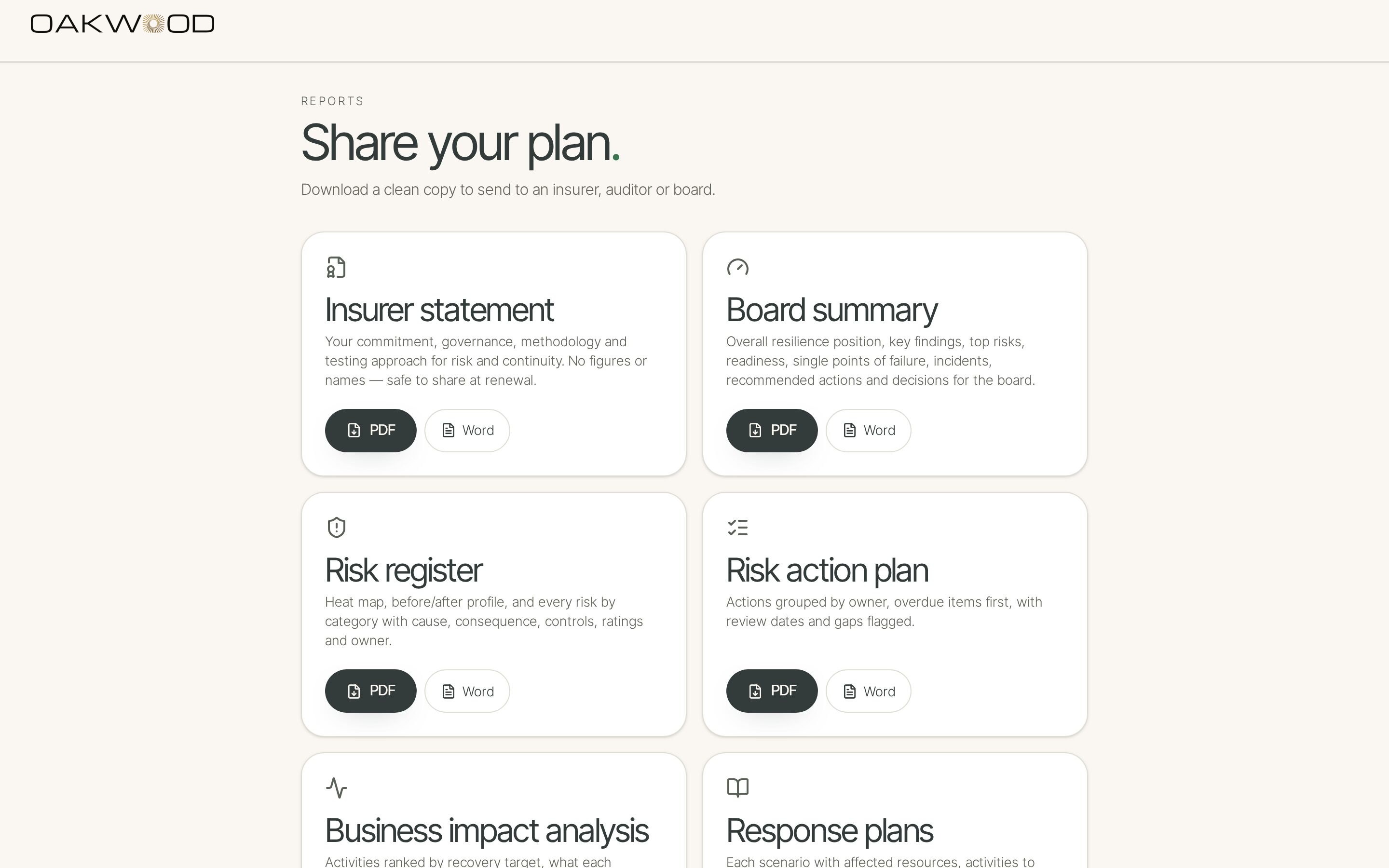
Demonstration capture; branding refreshed.
Report the position
Review site risks and overdue actions alongside the group position, then produce board, risk and incident reports from the records teams maintain.
Hub and spoke
Local ownership. Group-wide oversight.
Example Care's group operations manager runs the hub. Each General Manager runs a spoke for their own care home: Site One, Site Two or Site Three.
Hub users manage accounts and shared resources and see a consolidated view. Spoke users work within their own team and cannot see or switch to another spoke.
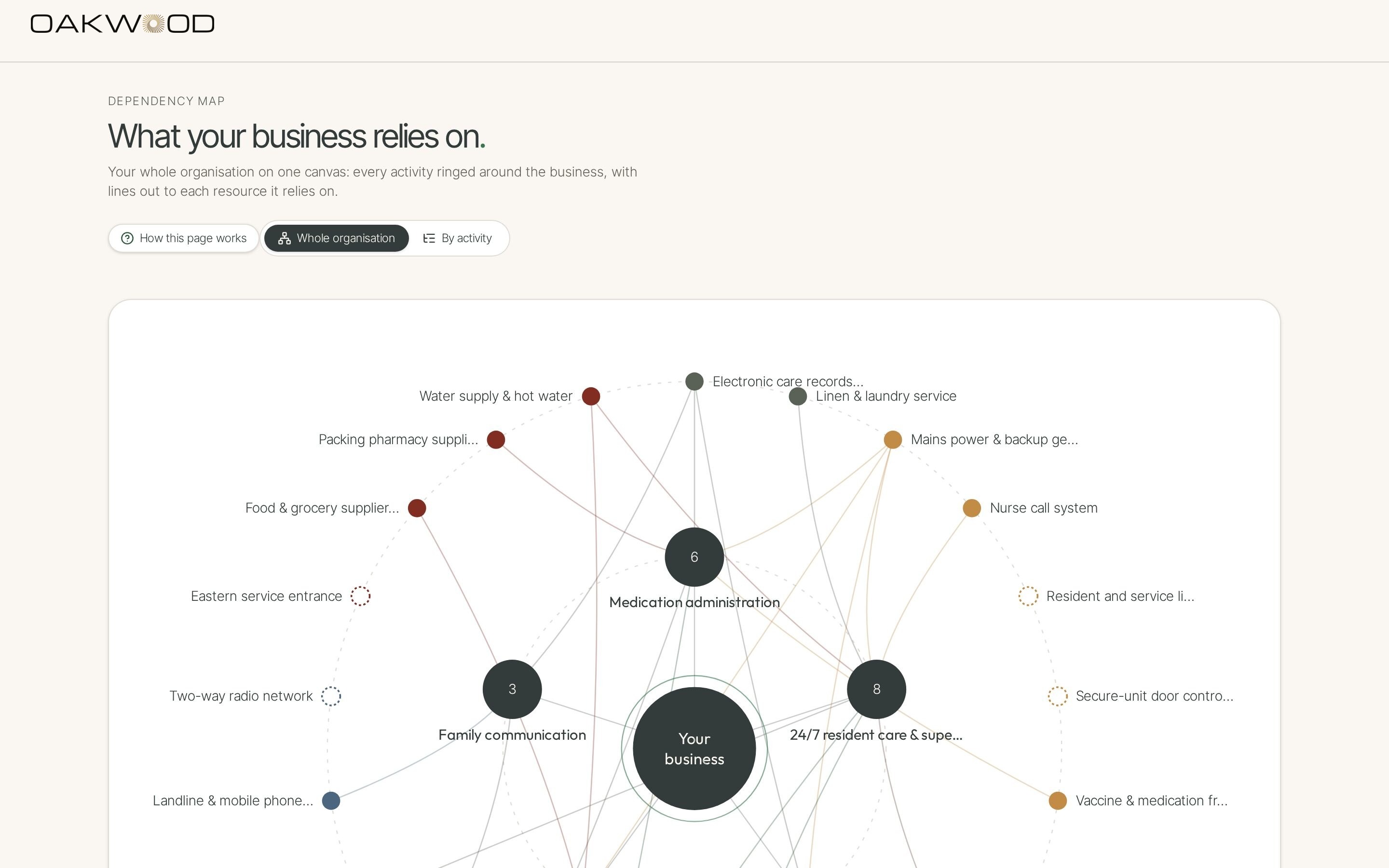
Demonstration capture; branding refreshed.
See how this would work across your care homes.
We can walk through your sites, risks and existing plans together.